Technology moves quickly. What feels cutting-edge today can feel outdated in just a few years.
So when investing in a custom smart home system, one of the most important questions isn’t:
“What’s possible right now?”
It’s:
“How do I design a system that will still feel current 10–15 years from now?”
Future-proofing your smart home doesn’t mean predicting every new gadget. It means building the right foundation — one that allows your technology to evolve as your lifestyle, family, and needs change.
What Does “Future-Proofing” Really Mean?
Future-proofing is about designing infrastructure that supports:
– System upgrades
– New device integrations
– Expanded automation
– Changing family needs
– Emerging technologies
It’s less about the specific devices installed today — and more about the architecture behind them.
1. Start with Infrastructure, Not Gadgets
The most future-ready homes are built around strong infrastructure.
That includes:
– Structured low-voltage wiring
– Conduit pathways for future cabling
– Centralized equipment locations
– Enterprise-grade networking
– Proper power conditioning and surge protection
When this foundation is in place, upgrading displays, touch panels, or control processors years later becomes straightforward.
Without it, upgrades can become invasive and expensive.
2. Invest in Professional-Grade Networking
Your network is the backbone of your smart home. As more devices connect — streaming services, security cameras, remote work setups, gaming systems — consumer-grade routers often struggle to keep up.
Future-proof networking includes:
– Commercial-grade routers and switches
– Properly placed wireless access points
– Segmented networks for security
– Capacity planning for growth
A well-designed network ensures your home can handle new technologies without performance issues.
3. Choose Scalable Control Systems
Some smart platforms are designed for small, isolated setups. Others are engineered for whole-home integration and long-term expansion.
A scalable system allows you to:
– Add motorized shades later
– Expand lighting control room by room
– Integrate outdoor entertainment areas
– Upgrade media spaces
– Incorporate future wellness technologies
The key is selecting a platform that grows with you rather than limiting you.
4. Design for Changing Lifestyles
Your needs today may look different in five or ten years.
You might:
– Add a home office
– Create a media room
– Expand outdoor living spaces
– Welcome aging parents
– Prepare your home for resale
– Future-ready automation can adapt to:
– Accessibility needs
– Enhanced security requirements
– Energy efficiency goals
– Increased property value expectations
Technology should support every stage of life — not lock you into one moment in time.
5. Plan for Software Updates & Support
Unlike traditional home systems, smart homes rely on software.
Future-proofing includes:
– Systems that receive long-term manufacturer support
– Remote service capabilities
– Update management
– Professional maintenance plans
Having a trusted integration partner ensures your system continues operating smoothly long after installation.
6. Think Beyond the Interior
Many New Jersey and greater Delaware Valley homeowners are expanding their use of technology outdoors.
Future-ready planning may include:
– Conduit to patios or pool areas
– Pre-wiring for landscape audio
– Outdoor Wi-Fi coverage
– Infrastructure for security cameras
– Space for future exterior displays
Planning these elements early avoids costly retrofits later.
7. Avoid Overcomplicating
Future-proofing does not mean installing every possible feature immediately.
In fact, the most intelligent approach is often:
– Install core infrastructure now
– Implement foundational systems (lighting, networking, security)
– Expand in phases as needs evolve
– A well-designed smart home should be modular — built in layers.
– The Value of Early Planning
– The best time to future-proof your smart home is during the design phase of new construction or renovation.
– Early collaboration between your integrator, builder, and architect ensures:
– Proper wiring pathways
– Adequate equipment space
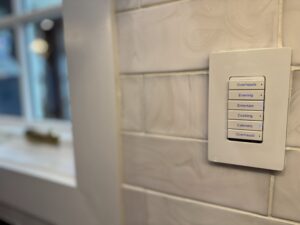
– Seamless keypad placement
– Shade pocket preparation
– Clean design integration
– But even in existing homes, thoughtful upgrades can dramatically improve long-term flexibility.
– Technology That Grows With You
– At its best, a smart home should feel timeless.
You shouldn’t feel pressure to “keep up” with technology. Instead, your home should be ready to adapt quietly in the background.
At Custom AV Integrators, we design systems throughout South Jersey, Philadelphia, and the New Jersey Shore with longevity in mind — focusing on strong infrastructure, scalable platforms, and thoughtful planning.
Because the smartest home isn’t the one with the most features. It’s the one that continues to serve you beautifully for years to come.
If you’re building, renovating, or considering an upgrade, we’d be happy to help you design a system that evolves with your life — not against it.