Smart home technology has never been more accessible. A quick online search reveals hundreds of DIY devices — smart switches, thermostats, cameras, speakers — all promising convenience at an affordable price.
At first glance, it seems simple:
Buy the devices. Plug them in. Download an app. Done.
But is DIY smart home technology really cheaper in the long run?
The answer depends on what you expect from your system — and how you define “cost.”
The Upfront Cost: DIY Wins (At First)
There’s no denying it: individual DIY devices are less expensive upfront.
You can purchase:
– Smart switches for a few hundred dollars
– Video doorbells for under $300
– Plug-and-play speakers
– Standalone smart thermostats
For small upgrades in a single room, DIY can be perfectly reasonable, but most homeowners don’t stop at one device.
The Hidden Cost of Fragmentation.
One of the biggest challenges with DIY smart homes is fragmentation.
Different brands often require:
– Separate apps
– Separate logins
– Separate updates
– Separate ecosystems
Over time, you may find yourself managing:
– One app for lighting
– One for security
– Another for audio
– Another for climate
– Another for cameras
What starts as “simple” can quickly become complicated.
A professionally designed system, by contrast, unifies everything into one cohesive interface.
Reliability: The Cost of Inconsistency
DIY systems typically rely heavily on Wi-Fi.
When your network becomes overloaded — streaming, gaming, remote work — smart devices can lag, disconnect, or fail.
Professional systems are built differently. They often include:
– Hardwired infrastructure
– Enterprise-grade networking
– Centralized processing
– Dedicated control systems
Reliability isn’t accidental — it’s engineered.
If your lights, security, or climate control are core parts of daily living, consistency matters.
Time Is a Cost, Too
DIY systems require you to:
– Research compatibility
– Install hardware
– Troubleshoot connectivity
– Manage firmware updates
– Diagnose problems when something stops working
For some homeowners, that’s enjoyable. For others, it becomes frustrating quickly.
With a professionally installed system, you gain:
– Expert design
– Clean installation
– Custom programming
– Ongoing service and support
You’re not just purchasing equipment — you’re investing in expertise and long-term performance.
Scalability: What Happens in 5 Years?
Many DIY systems work well at small scale.
But what happens when you want to add:
– Motorized shades
– Whole-home audio
– Outdoor AV
– Integrated lighting scenes
– A dedicated home theater
Not all DIY platforms scale smoothly. Compatibility can change. Products get discontinued. Integrations break.
A professionally designed smart home is built with future expansion in mind. Infrastructure is planned early. Equipment is selected for longevity.
That future flexibility has real value.
Security Considerations
Cybersecurity is often overlooked in DIY systems.
Consumer-grade devices may:
– Share data across multiple cloud platforms
– Receive inconsistent security updates
– Rely entirely on Wi-Fi protection
– Professional systems are typically configured with:
– Secured networks
– Segmented traffic
– Controlled remote access
– Managed updates
In homes where security systems and surveillance are integrated, that added protection matters.
The Experience Factor
Perhaps the biggest difference isn’t cost — it’s experience. DIY smart homes often function as a collection of devices. Custom smart homes function as a single, cohesive environment.
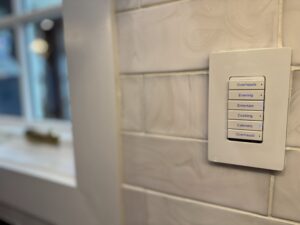
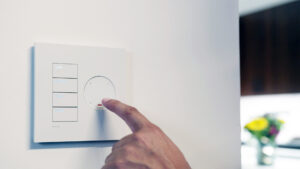
Press one button:
– Lights dim
– Shades lower
– Music begins
– Climate adjusts
– No app switching. No device juggling. No delays.
Just seamless automation.
So… Is DIY Really Cheaper?
If your goal is to automate a few lights or install a video doorbell, DIY can absolutely be cost-effective.
But if your goal is:
– Whole-home integration
– Elegant design
– Long-term reliability
– Scalable infrastructure
– Unified control
Then DIY often becomes more expensive over time — not necessarily in dollars upfront, but in frustration, limitations, and eventual upgrades.
Many homeowners who begin with DIY eventually transition to professionally integrated systems after outgrowing their original setup.
The Better Question to Ask
Instead of asking:
“Which option is cheaper?”
Consider asking:
“What kind of experience do I want in my home?”
Technology should feel effortless. It should enhance your lifestyle — not require constant management.
At Custom AV Integrators, we design smart home systems that are engineered for reliability, elegance, and long-term performance across New Jersey and Delaware Valley homes. Because the true value of a smart home isn’t in the number of devices — it’s in how seamlessly they work together.
If you’re exploring your options, we’re happy to help you understand what makes the most sense for your home, your goals, and your future plans.