Smart home technology has never been more accessible.
From smart lighting and thermostats to whole-home audio and motorized shades, homeowners can purchase devices almost anywhere. But installing devices is not the same as designing a fully integrated smart home system.
Professional home automation installation ensures your technology works together seamlessly, reliably, and intuitively — not as a collection of disconnected apps.
If you’re investing in your home, professional integration matters.
Smart Devices vs. Smart Home Systems
There’s a major difference between adding smart products and creating a cohesive home automation system.
DIY smart home setups often result in:
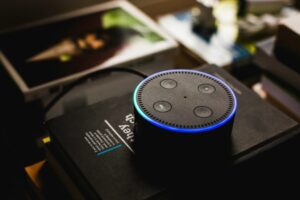
- Multiple apps for different devices
- Inconsistent performance
- Wi-Fi overload
- Limited automation capabilities
- Compatibility issues
Professional smart home installation focuses on system design first — selecting components that communicate properly and function as one coordinated platform.
The result is simplicity, not complexity.
Why Professional Smart Home Installation Matters
1. Proper System Design
A professionally installed home automation system begins with a plan.
An integrator evaluates:
- Home layout and construction
- Network infrastructure
- Lighting loads and wiring
- Equipment placement
- Future expansion needs
This planning stage ensures your smart lighting, AV systems, climate control, and security are engineered for long-term reliability.
Without it, performance suffers.
2. Reliable Network Infrastructure
Your smart home is only as strong as your network.
Many DIY issues stem from:
- Weak Wi-Fi coverage
- Overloaded routers
- Poor device placement
- Interference
Professional installers design robust wired and wireless networks that support streaming, automation, surveillance cameras, and remote access without interruption.
A strong backbone prevents daily frustration.
3. Seamless System Integration
True home automation means your systems communicate with one another.
Professionally integrated systems allow:
- Lighting to respond to security events
- Shades to adjust with temperature changes
- Audio and video to activate with scenes
- Outdoor lighting to coordinate with sunset schedules
This level of integration requires programming expertise that goes far beyond device setup.
4. Clean, Centralized Control
One of the biggest advantages of professional installation is unified control.
Instead of juggling multiple apps, you gain:
- A single touchscreen interface
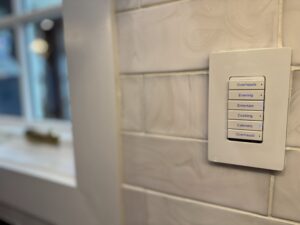
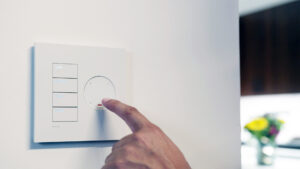
- Elegant in-wall keypads
- Seamless voice integration
- Consistent user experience across rooms
Technology should feel effortless — not overwhelming.
5. Long-Term Support & Scalability
Homes evolve. Technology should too.
Professional home automation systems are designed to:
- Expand as your needs grow
- Integrate new technologies
- Receive software updates
- Maintain long-term reliability
DIY systems often require complete replacement when upgrading. Professionally designed platforms are built to scale.
Protecting Your Investment
Home automation is more than convenience — it’s an investment in your property.
Professionally installed systems can:
- Increase home value
- Improve energy efficiency
- Enhance security
- Elevate entertainment experiences
- Improve daily comfort
Poorly installed systems can do the opposite — causing frustration, service calls, and unnecessary upgrades.
Quality installation protects both performance and property value.
The Hidden Costs of DIY Automation
While DIY products may appear cost-effective upfront, hidden costs often include:
- Replacing incompatible devices
- Hiring technicians to fix network issues
- Time spent troubleshooting
- Performance limitations
- System instability
Professional design eliminates guesswork and reduces long-term costs.
Experience the Difference of Professional Integration
A truly smart home should feel intuitive, elegant, and reliable.
Professional home automation installation ensures your lighting, shading, audio, video, climate, and security systems work together as a cohesive experience — not a patchwork of devices.
If you’re considering home automation in Southern New Jersey, the New Jersey Shore, Philadelphia, or the Delaware Valley, working with an experienced integration team ensures your investment performs beautifully from day one — and for years to come.