Pre-Wire vs. Retrofit: When Is the Best Time to Install Smart Home Technology?
If you’re building a new home or planning a renovation, there’s one question that can significantly impact both your budget and your experience:
When is the best time to install smart home technology?
The short answer: earlier than most people think.
Whether you’re designing a custom build in the Delaware Valley or updating an existing home, understanding the difference between pre-wiring and retrofitting can save you money, improve performance, and future-proof your investment.
What Does “Pre-Wire” Mean?
Pre-wiring happens before drywall goes up — during new construction or a major renovation. At this stage, low-voltage wiring for lighting control, networking, audio, security, surveillance, and shading is installed inside the walls and ceilings while everything is open and accessible.
This allows for:
– Clean, hidden infrastructure
– Centralized equipment locations
– Hardwired connections (more reliable than Wi-Fi alone)
– Greater system scalability
– Lower labor costs compared to retrofitting
– Pre-wire is the ideal scenario for designing a fully integrated smart home.
What Is a Retrofit?
A retrofit is when smart technology is added to an already completed home.
This may involve:
– Fishing wires through walls
– Using wireless solutions
– Replacing existing switches or fixtures
– Strategically minimizing wall openings
Retrofitting is absolutely possible — and often successful — but it requires more creativity, more labor, and sometimes compromise depending on the home’s construction.
Why Pre-Wire Is Almost Always the Best Time
1. It’s More Cost-Effective
Running wire through open framing is dramatically faster and less invasive than opening finished walls. Labor costs are lower, and there’s no need for drywall repair or repainting.
Even if you’re not installing all technology immediately, pre-wiring allows you to prepare for it.
2. You Get Better Performance
Hardwired connections are:
– More stable
– Faster
– More secure
– Less dependent on Wi-Fi congestion
For lighting control, whole-home audio, surveillance cameras, and motorized shades, wiring during construction provides superior long-term reliability.
3. It Future-Proofs Your Home
Many New Jersey homeowners aren’t ready to invest in full automation during construction — and that’s okay.
A strategic pre-wire plan allows you to:
– Add lighting control later
– Upgrade to motorized shades in the future
– Install distributed audio when you’re ready
– Expand networking as needs grow
Without proper pre-wire, future upgrades may become more complicated and more expensive.
When Retrofit Makes Sense
Not everyone is building from scratch. Retrofit solutions are often ideal when:
– You’ve recently purchased an existing home
– You want to upgrade gradually
– You’re focusing on specific rooms (media room, home office, primary suite)
– You’re improving security or networking
Today’s professional-grade wireless solutions allow us to modernize many homes without major disruption.
The key is designing the system intelligently from the start — even in a retrofit scenario.
The Biggest Mistake Homeowners Make. Waiting too long.
Many homeowners in NJ and PA begin thinking about smart home systems after electrical work is already complete — or worse, after drywall is finished.
By that point:
– Switch boxes may be limited
– Equipment spaces may not be planned
– Network cabling may be insufficient
– Lighting zones may not be optimized
Technology works best when it’s part of the architectural conversation — not an afterthought.
Working with Your Builder or Architect
If you’re building or renovating, your smart home integrator should collaborate with:
– Your architect
– Your interior designer
– Your builder
– Your electrician
Early coordination ensures:
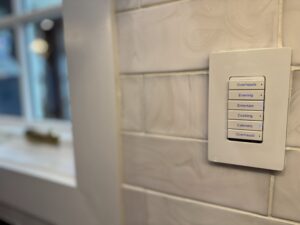
– Clean keypad placement
– Proper lighting load planning
– Dedicated equipment spaces
– Shade pocket preparation
– Correct conduit pathways
When technology is considered early, it becomes seamless — not visible or intrusive.
So, When Is the Best Time?
The best time to plan smart home technology is during the design phase.
Even if you don’t install everything immediately, planning infrastructure early gives you flexibility, better performance, and long-term savings.
If you’re already living in your home, it’s not too late — but thoughtful design is still essential.
Designing for Today — and Tomorrow
At Custom AV Integrators, we work with New Jersey, Pennsylvania, and Delaware homeowners at every stage:
– New construction
– Major renovations
– Selective upgrades
– Full-home retrofits
Our goal is to design systems that feel effortless, elegant, and scalable — whether we’re wiring before drywall or upgrading an existing space.
If you’re planning a build or renovation, the earlier we’re involved, the better your results will be.
Have a project coming up? Let’s talk before the walls go up