A great home theater is not a bigger TV and a soundbar. It is a room planned around the picture, the sound and the people in the seats, so movie night feels like an event instead of a compromise. If you are thinking about a home theater setup, here is what a professionally designed room includes and how the process works.
Start With the Room, Not the Equipment
Every good theater starts with the space. The size and shape of the room, where the windows and doors are, the ceiling height and what is above and below it all shape the design. A basement, a bonus room over the garage and an open family room each call for a different approach.
Before we pick a single component, we look at how you want to use the room. A dedicated cinema for the whole family is different from a media room that also hosts game day, and different again from a lower level that doubles as a lounge.
Home Theater vs Media Room
A dedicated theater is built for one purpose: an immersive picture and sound with the lights down. It usually means a projector and screen, speakers hidden in the walls and ceiling, acoustic treatment, light control and seating arranged so every seat is a good one.
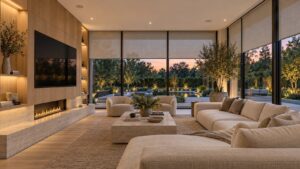
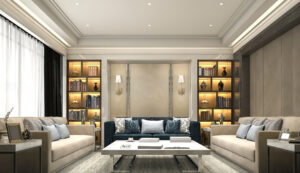
A media room is a living space that also delivers a great movie experience. Think a large display, surround sound that disappears into the design and lighting that goes from bright to movie mode with one touch. It works for daytime TV, sports and gaming as well as movies.
What Goes Into a Professional Home Theater Setup
Picture
The choice between a projector and a large display depends on the room, how much light you can control and how big you want the image. Screen size and seating distance are planned together so the picture fills your view without feeling overwhelming.
Sound
Immersive surround sound comes from speakers placed for the room, not just wherever they fit. In wall and in ceiling speakers keep the look clean, and subwoofers are positioned so the bass is even across the seats instead of booming in one corner.
Acoustics
Hard walls and floors bounce sound around and muddy dialogue. Acoustic treatment, often hidden behind fabric panels, keeps voices clear and effects sharp. It also helps keep the movie in the theater and out of the rest of the house.
Lighting + Shades
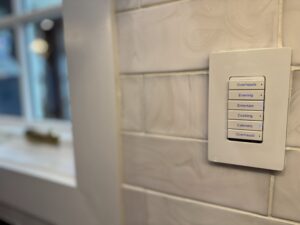
Lighting control sets the mood for the whole experience: house lights down, step lights on, shades closed, all with one button. Motorized shades handle daytime glare in rooms with windows.
Seating
Seating is planned with the screen and speakers, including how many rows, whether a riser is needed and where the sweet spot falls. Comfort matters as much as sight lines.
Simple Control
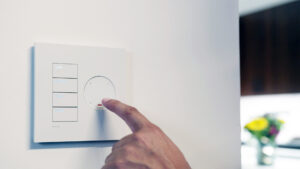
All of it comes together on one remote, keypad or app. Press “Watch a Movie” and the system turns everything on, picks the right source, dims the lights and closes the shades. Anyone in the family can use it, including guests.
Why Design Comes First
Most disappointing theaters were not short on good equipment. They were short on planning. Speakers in the wrong place, a screen at the wrong height or a room that echoes will hold back even the best gear. Home theater design work lays out the room before anything is ordered, so the finished space performs the way it should and looks like it belongs in your home.
In a new build, we plan the wiring with your builder before the walls close. In an existing home, we design around what is already there and keep the work clean.
Ready to Plan Your Theater?
We design and install home theaters and media rooms across South Jersey, the Jersey Shore, Wilmington and the Philadelphia suburbs. See our Home Theaters page for more, or contact us today to talk about your space.
Written by Justin Kaplan, owner of Custom AV Integrators in Mullica Hill, NJ.